


| Хабарҳо |
|
HAPPY KNOWLEDGE DAY AND PEACE LESSON!
(Reflections on the speech of the President of the Republic of Tajikistan, Leader of the Nation, Honorable Emomali Rahmon, on the occasion of the beginning of the new academic year, the celebration of Knowledge Day, and the conduct of the Peace Lesson)
 The speech of the President of the Republic of Tajikistan, Leader of the Nation, Honorable Emomali Rahmon, on the occasion of Knowledge Day and the Peace Lesson began with an analysis of the current geopolitical situation in the modern world, the strengthening of peace and stability in the global community, and the creation of a calm and secure environment for the development of various sectors of the country’s life-especially the education sector-and this was not without reason.
Peace is the foundation of a knowledge-based society, a factor in the survival and progress of humanity, and a key criterion for the advancement of science and education. Without peace, knowledge cannot thrive. Conversely, it is through the development of science and the continuous enhancement of knowledge that humanity ensures peace throughout the world. These concepts, being deeply interconnected, enrich the thinking of any rational individual.
The Peace Lesson awakens in everyone a sense of patriotism, respect for science and education, and gratitude for the blessings of peace and stability. It remains in people’s minds as a beacon of enlightenment and a fundamental condition for the spiritual development of the individual.
During the years of independence, the Peace Lesson has become one of the most cherished traditions of society. Its aim is the development of human potential in an environment of calm and security.
According to the President, the current global situation compels our youth to embrace the idea of peace, stability, unity, and mutual understanding as essential and inseparable parts of both culture and national identity, and to make every effort toward their further consolidation.
Tajikistan’s new initiative - “The Decade for the Strengthening of Peace in the Interests of Future Generations” - is a logical continuation of the country’s peace-oriented policy on the international stage.
The call to unite the efforts of the global community for the peaceful resolution of global issues-such as conflicts, wars, poverty, inequality, and climate change, which threaten the peace and security of future generations-forms the essence of this initiative.
We are convinced that the peacebuilding initiatives of the President of the Republic of Tajikistan, Honorable Emomali Rahmon, are acquiring new meaning and direction in today's world, as they are based on the hopes and aspirations of all humanity.
That is why beginning Knowledge Day with the Peace Lesson strengthens the collective commitment to cultivating a peaceful worldview and fostering tolerance in individuals.
In the Leader of the Nation’s speech on the occasion of Knowledge Day and the Peace Lesson, special attention was given to educational reform. This is no coincidence, as in the national leader’s policy, education is declared a priority sector. In addition to budgetary funds, significant amounts are allocated annually to the development of education through state investment projects.
Over the 34 years of independence, 67.4 billion somoni have been allocated to the education sector from the state budget, and 6.2 billion somoni from investment projects-a total of 73.6 billion somoni.
The Head of State expressed satisfaction that during the years of independence, patriotic entrepreneurs and philanthropists in the country have constructed and commissioned 1,435 educational institutions with 231,000 seats, amounting to 1.7 billion somoni in total investments. The President recognized this cooperation between philanthropists and entrepreneurs in building educational facilities as a noble deed and a commendable initiative contributing to the development of education.
One of the key points in the President’s speech was the focus on the quality of education.
Higher professional education, according to the Leader of the Nation, is one of the main pillars of a country’s socio-economic development. He emphasized that in today’s rapidly changing world, where labor market demands are constantly evolving, the need for high-quality higher education as a source of knowledge, technology, and innovation is more urgent than ever.
Only through high-quality higher education can a society rely on a workforce equipped with deep knowledge, a sense of responsibility, and broad vision, capable of playing an active role in all spheres of life.
In our opinion, this important guiding principle should become a beacon for all employees of the education system-from administrative staff to teachers and students. Today, quality plays a far more important role than quantity in the labor market.
The preparation of specialists equipped with modern knowledge is a critical task for the leadership and staff of the education sector, and the Tajik State Pedagogical University named after Sadriddin Ayni is no exception.
To improve the level and quality of education for the 2024-2025 academic year, a permanent working group consisting of 17 university faculty members was created by order of the rector to serve as experts. This group was assigned to regularly analyze and assess the teaching practices of departmental instructors.
In the first six months of the current year, 160 academic sessions were analyzed, their quality evaluated, and recommendations and proposals were submitted to improve the learning process and conduct classes in a competency-based format.
I believe this measure is one of the key factors contributing to the improvement of education quality. Practice has shown that focusing on the quality of instruction gradually increases the level of knowledge acquisition.
As a result of these effective measures, in the first semester of the 2025 academic year, the number of students studying exclusively with excellent marks reached 657, compared to 447 in the previous year. Additionally, the number of students receiving merit-based scholarships increased from 430 to 581.
Improving the quality of education is also directly related to the recruitment of faculty members with academic degrees and titles. Accordingly, the percentage of such faculty at our university is steadily growing. Out of a total of 630 full-time staff, 305 (or 48.4%) hold academic degrees and titles, which is 4.4% more than the previous year.
Regarding the President’s emphasis on raising the quality of education, it is worth noting that the Higher Education Quality and Accreditation Council (HEQAC) published the Global University Ranking for 2025, based on the analysis of various aspects of the performance of 422 universities from 55 countries.
Three universities from Tajikistan were included in this ranking:
- Khujand State University named after Bobojon Gafurov ranked 184th,
- Khatlon State Medical University ranked 329th.
Fortunately, the Tajik State Pedagogical University named after Sadriddin Ayni, with a score of 8,136 points, ranked 8th among the universities worldwide, thereby securing the top position in Tajikistan. This marks the first time in the history of higher education in the country that a university has achieved such a high international score and entered the top 10 of the global ranking.
In order to ensure comprehensive oversight over the ongoing initiatives of the respected Leader of the Nation, Emomali Rahmon, regarding the development of foreign languages-particularly Russian and English-and the promotion of multilingualism, two cultural centers have been established at the university: the "Chinese Center" and the "Korean Center". At the same time, the "Russian Center" has been fully renovated in accordance with modern standards and equipped with the latest technologies. The official opening ceremony of these centers will soon be held with the participation of representatives from the Ministry of Education and Science of the Republic of Tajikistan.
The President also focused on the training of teachers in natural sciences, exact sciences, and mathematics, emphasizing the need to prepare highly qualified teachers and researchers in these fields in the future, to strengthen the implementation of the "Twenty Years of Study and Development of Natural, Exact, and Mathematical Sciences" in the fields of science and education, and to increase enrollment in budget-funded programs in these areas.
In response to this important directive, we have already begun implementing it. At the Tajik State Pedagogical University named after Sadriddin Ayni, 6,935 students, or 41% of the total number of students, are studying in natural sciences, exact sciences, and mathematics. Of these, 4,098 students (or 59.1%) are on budget-funded programs. According to the directive of the Leader of the Nation, the number of budget-funded places in pedagogical fields will continue to increase.
The development of national pedagogy also remains a key priority of the President, who stressed the need to develop our national pedagogy by integrating the achievements and innovations of the modern era. The fulfillment of this task lies primarily with scholars in the field of pedagogy.
As one of the leading higher education institutions in the country, the Tajik State Pedagogical University named after S. Ayni makes a significant contribution to the development of national pedagogy. The scientific works of the university’s faculty increasingly emphasize aspects of national pedagogy. While last year, university faculty authored 40 monographs, this year the number has increased to 54. In addition, 28 textbooks published this year have further enriched the treasury of national pedagogical knowledge. The total number of scientific and popular science articles reached 1,558 titles.
In national competitions:
- In the “Furūġi subḥi donoī kitob ast” competition, 7 participants became winners,
- In the “Rector’s Cup of the Tajik State Pedagogical University named after Sadriddin Ayni”, 3 participants won,
- In the “Rector’s Cup of the International University of Tourism and Entrepreneurship of Tajikistan”, 2 participants were awarded,
- And in the national academic Olympiads, 2 more individuals claimed victory.
I believe that all of these achievements, taken together, will significantly contribute to the development of national pedagogy.
The issues of science and education development, as well as the integration of science with production and the national economy, were at the core of the Leader of the Nation's speech on the occasion of Knowledge Day and the Peace Lesson.
To implement this vision, in 2025, construction began on a small-scale factory for the production of detergents and cosmetics on the grounds of the university’s Agrobiological Laboratory Park in the Romit Valley. The facility, covering 0.6 hectares, is expected to produce over 20 types of cleaning and cosmetic products.
In addition, projects for building a modern printing house and a syrup production workshop are being developed in collaboration with partners from China. Based on the university’s scientific potential and its international partnerships, these initiatives are clear examples of the science-to-production connection in action.
It should be noted that to ensure the timely implementation of the President’s directives regarding the link between science and industry, the university’s technopark has already launched the production of:
- Desks and chairs for general education and higher education institutions,
- Furniture for dining halls, comfortable conference chairs, podiums, bookshelves, and beds,
- As well as printing of slogans and posters.
Thus, the Technopark of the Tajik State Pedagogical University named after Sadriddin Ayni is currently one of the most successful university technoparks in the country.
Another critically important theme addressed by the President in his Knowledge Day and Peace Lesson speech was the recognition of the teacher’s role and status in society. In this context, the drafting of the Law of the Republic of Tajikistan “On the Status of Teachers” is a clear sign of the government’s special attention to the work of educators.
“The teacher is the pride and honor of a nation,”
- emphasized the Leader of the Nation - “The present and future of every country largely depends on the level of education and professionalism of its teachers.”
Indeed, a teacher’s wisdom eliminates ignorance and prejudice, and becomes a source of national progress. In addressing the challenges faced by the nation and the state, teachers play a key role.
Respecting a teacher means respecting oneself, one's nation, and one's society. The more we elevate the teacher’s status, the more prosperous and advanced our society becomes. These sincere and inspiring words of the President encourage educators and academic staff to strive for new achievements and conquer new frontiers in knowledge and science. They ignite a passion for teaching and nurturing minds, cultivate widespread societal respect for teachers, and lead us toward a civilized, knowledge-based society enriched with spiritual values.
Welcome, Bright Knowledge Day!
You shine upon the world like the morning sun.
To all who serve in the name of science and school-
We sincerely congratulate you on the Peace Lesson and Knowledge Day!
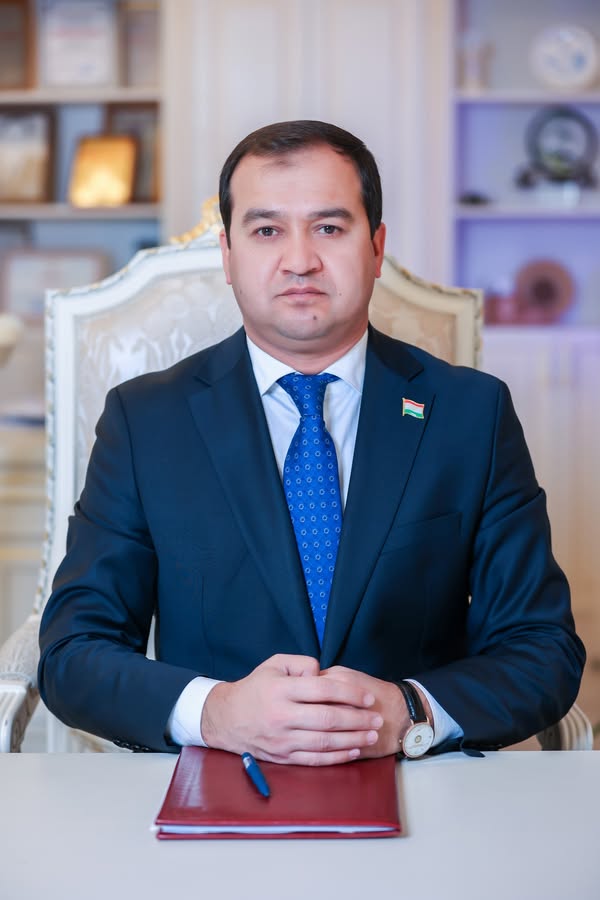
Ahliddin Ibodullozoda – Rector of the TSPU named after S. Ayni
|


Full name: Tajik State Pedagogical University named after Sadriddin Aini.Address: 734003, Dushanbe City, 121, Rudaki Avenue.
Telephone: +992(37) 224-13-83
WWW: www.tgpu.tj E-mail: info@tgpu.tj